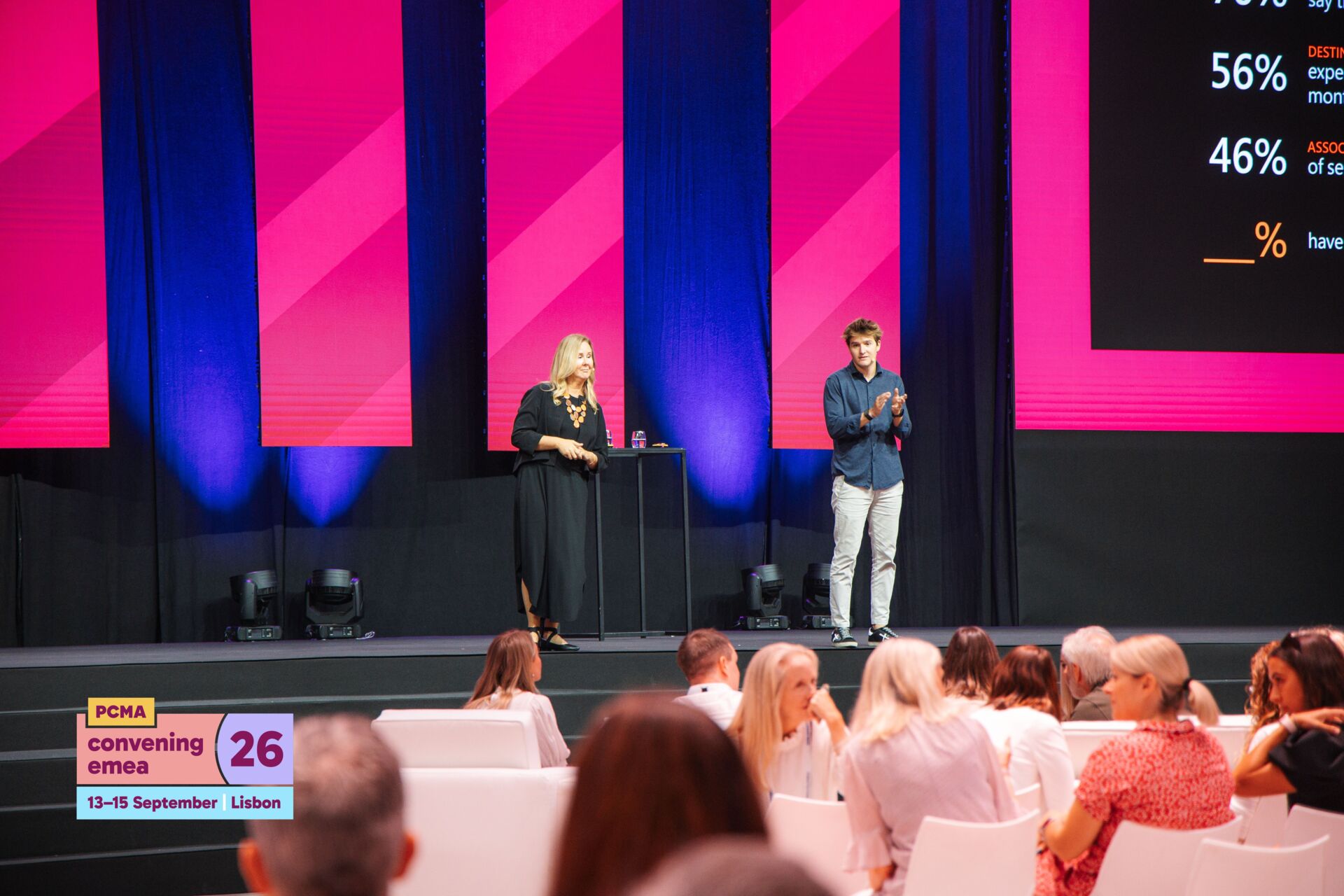
Held in Lisbon from 13 to 15 September, PCMA Convening EMEA 2026 brought together business events professionals to explore the forces reshaping the industry. MCI was represented across the programme by Laurence Julliard, Global Head of Client Solutions; Avinash Chandarana, Chief Learning and Transformation Officer; Albert Garcia, Sales Strategy & Enablement Manager within MCI’s Business Intelligence Unit; and Sandrine Castres, Managing Director of MCI Spain, who moderated a panel discussion.
Across their sessions, different questions surfaced around AI, measurement, audience behaviour and professional growth. Here is what stood out.
AI needs to move from efficiency to value
Laurence took part in a peer discussion titled “Is AI an investment or a cost?” The session explored how organisations are funding AI, where it can support growth and differentiation and how meaningful return should be defined across teams, clients and communities.
The discussion moved through three levels of AI value: efficiency, value creation and competitive advantage. Saving time and reducing cost may be the starting point, but the bigger opportunity is improving services, customer and stakeholder engagement, decision-making and commercial performance, and ultimately creating something that strengthens an organisation’s positioning or value proposition.
Laurence also noticed a strong appetite for practical guidance. The interest centred on where AI can create enough value to justify investment, and how organisations can turn that potential into competitive advantage. That also means widening the definition of ROI beyond time and cost savings to include outcomes such as engagement, experience, stronger decisions and commercial value. And there is a governance question too: who owns AI inside the organisation, and who is accountable for the value it creates?
The focus now should be on turning AI from a useful tool into something that delivers measurable business value.
How to increase event attendance? Start with audience barriers
Albert’s session, “From signals to strategy: Turning the PCMA Outlook Report insights into action”, explored how corporate event teams, associations and destinations are responding to changing expectations. For organisations asking how to increase event attendance, his starting point is understanding what may stop priority audiences from engaging in the first place.
Research findings discussed in the session included that just 5% of organisations truly understand the hidden barriers facing their priority client segments. This prompted a surprised reaction from attendees in the room, who had expected that figure to be around 25%.
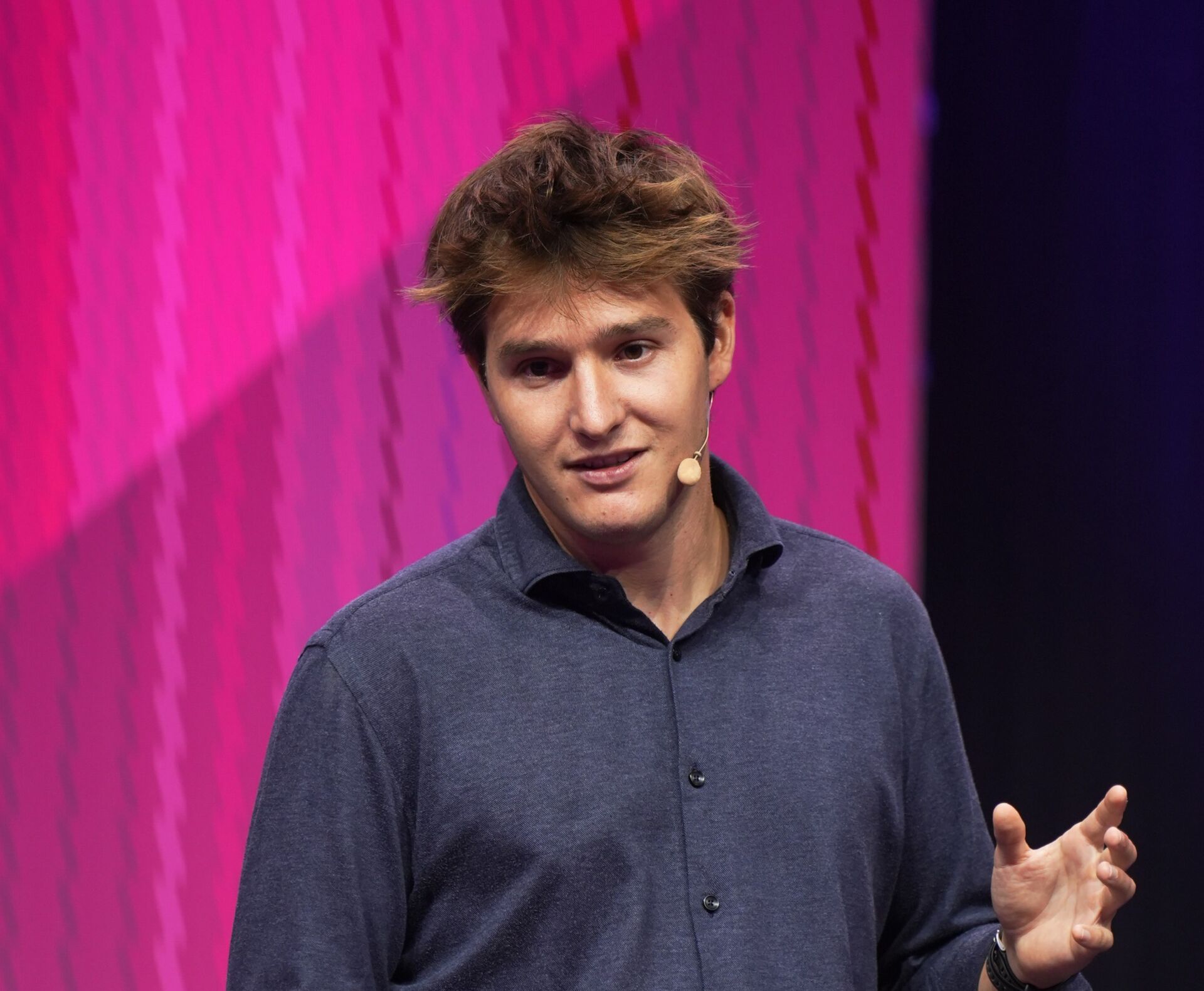
Identifying a target audience is only the first step. Albert (pictured above) explains that knowing which sectors or clients to target is only part of the job. Organisations also need to understand the pressures those clients face and what might prevent them from making a decision.
For organisations wondering how to draw a crowd to an event, that means looking beyond promotion to understand the pressures and barriers shaping people’s decisions. For a destination, that may mean looking beyond the type of event a client runs to understand how decisions are made inside the organisation. For an association, it could mean asking why people engage with content and events without ever becoming members.
The same thinking applies to measurement. Among corporate respondents, 68% identified data or data quality as a major barrier. “If you don’t have the data, you can’t make a strategic decision because you’re just going off thin air,” Albert notes.
But data is only useful if the organisation is clear about what it is trying to decide. Why does an event exist? Which events deserve investment? What should each one contribute to wider organisational objectives? And what evidence would show whether it is working?
The bigger challenge is strategic. More than half of corporate and association respondents gave their event portfolios less attention than other areas, while only 36% of respondents had a framework for assessing future readiness. And with 75% of corporate respondents globally expecting teams to stay the same size or shrink, rising to 80% in Europe, the pressure to make those choices more carefully is only increasing.
Future readiness is also about trust
Avinash’s Next Gen workshop approached future readiness from a very different angle. It brought students and early-career professionals together to explore relevance, confidence, influence and professional growth.
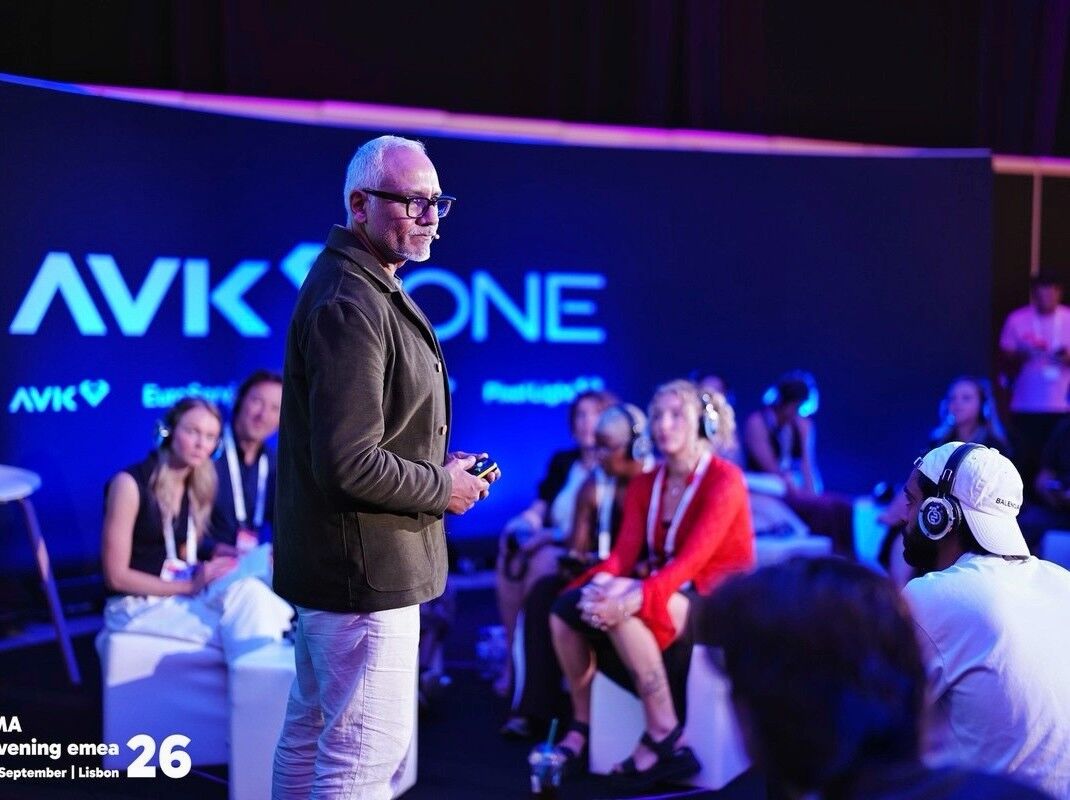
The conversation kept coming back to ownership. “Trust is rarely handed over. It's earned over time, usually in the first weeks or months, by showing reliability and taking on responsibility,” notes Avinash (pictured above) . “Ownership and accountability came up again and again as what really opens doors for the next generation.”
Participants described opportunities that came from unexpected moments: someone leaving a team, a gap opening up, or a task that nobody else had time to take on. Those who stepped in were often given more responsibility.
“Being proactive matters. Don't wait to be given responsibility; ask for it,” Avinash advises. “Opportunities often come from unexpected situations: a colleague leaving, a gap in the team, or simply a task nobody else had time for. Those who step in get noticed.”
There was also an interesting generational difference. More experienced participants tended to emphasise working hard and proving your worth. Younger participants spoke more about being given room and trust earlier.
Event engagement tips: understand what people value
Generational engagement surfaced beyond the Next Gen workshop too. Albert noticed repeated questions across the conference about how organisations can engage younger audiences, while Laurence connected the issue to brands trying to understand changing expectations among younger consumers.
One of the most useful event engagement tips to emerge was also one of the simplest: understand what people value, what influences their decisions and what encourages them to participate. The same principle can inform post event engagement strategies, where continued relevance depends on understanding why people engaged in the first place and what would encourage post-event engagement to continue.
Across the conversations, the need for clearer choices kept resurfacing. The starting point is the same: be clear about the outcome you want, then decide where resources and responsibility belong.
Evidence at a glance
The PCMA Outlook findings shared during Convening EMEA included:
- 5% of organisations truly understand the hidden barriers facing their priority client segments.
- 68% of corporate respondents identified data or data quality as a major measurement barrier.
- 75% of corporate respondents globally expected teams to stay the same size or shrink, rising to 80% in Europe.
- 36% of respondents across the sectors studied had a framework for assessing future readiness.
- 54% of corporate and association respondents gave their event portfolios less attention than other areas.
These figures were shared during the PCMA Outlook 2026 session and supplied by Albert Garcia following Convening EMEA.
Author bios
Laurence Julliard is MCI’s Global Head of Client Solutions, with extensive experience in marketing, communications and international event programmes. She has worked across complex global organisations, with a strong focus on strategic delivery, ROI and executive speaker programmes.
Avinash Chandarana is MCI’s Chief Learning and Transformation Officer and a Fellow of the Learning & Performance Institute. He leads global learning and development strategy, with a focus on building engaged, high-performing teams and using AI and digital tools to create more personalised experiences.
Albert Garcia is a strategic consultant at MCI, specialising in business intelligence, AI and social listening. His work spans market analysis, lead generation and partnership development, alongside a strong interest in using sports and events to create positive social impact for organisations and communities.
FAQs
What are the biggest business events trends for 2026?
What are the biggest business events trends for 2026?
The discussions at PCMA Convening EMEA pointed to stronger scrutiny of AI investment, event portfolio strategy, measurement, audience understanding and future talent. Across these areas, organisations are looking for clearer evidence of where value is created.
How can organisations improve event measurement?
Start by defining why an event exists and what business or organisational outcome it should support. Data becomes more useful once teams know which decisions they need it to inform.
How should companies measure the value of AI?
AI value should be connected to defined outcomes such as improved decision-making, better customer understanding, growth, differentiation or efficiency. The right measure depends on the problem the organisation is trying to solve.
How can organisations engage younger generations?
Understanding behaviour and barriers is more useful than relying on broad assumptions about age. For employees, meaningful responsibility and trust matter. For audiences and customers, organisations need to understand what drives participation, relevance and longer-term engagement.
How should audience insight shape a post event marketing strategy?
Start with what you know about why people engaged, what they valued and what may stop them from engaging again. A post event marketing strategy is stronger when follow-up reflects those motivations and barriers rather than treating every attendee in the same way.
Glossary
Event portfolio strategy: A structured approach to deciding the role, priority and investment level of events across an organisation.
Future readiness: An organisation’s ability to assess change, make informed decisions and adapt its strategy as conditions evolve.
AI value creation: The use of AI to produce measurable organisational or customer value, including growth, better decisions, differentiation or efficiency.
Audience barriers: Factors that may prevent a target audience from taking a desired action, even when they are interested or engaged.
Further reading
The new growth equation: creativity, intelligence and impact
The attention advantage in an age of AI
Want to make clearer decisions about where your events, experiences and audience investments create value? Talk to MCI about turning insight into strategy and measurable action.
 Laurence Julliard - Global Head of Client Solutions
 Avinash Chandarana - Group Learning and Development Director
 Albert Garcia - Strategic Consultant Business Intelligence, mci group


