

Most experience teams want to experiment; they are also working with tight timelines, limited budgets and stakeholders who need evidence before backing a new idea. And that pressure often leads teams towards familiar formats. AI offers a practical way to explore something new without treating every early idea as a finished proposal.
An AI-powered experience lab is a way of working: begin with a clear problem, create something people can respond to, test it and decide what deserves further investment.
As Edouard Duverger, mci group’s Chief Information Officer, explained at MCI’s Business Academy, “The idea is to be inspired by how we can innovate, collaborate more and include AI in the way we serve clients… And believe it or not, you can earn trust using AI.”
That trust comes from using AI with purpose. A prototype gives clients, stakeholders and audiences something tangible to discuss. Teams can gather reactions while the idea is still flexible and relatively inexpensive to change.
It also makes audience co-creation more useful. Instead of asking people what they might want in the abstract, teams can show them an early concept and learn from how they respond.

How can AI help event teams prototype ideas faster?
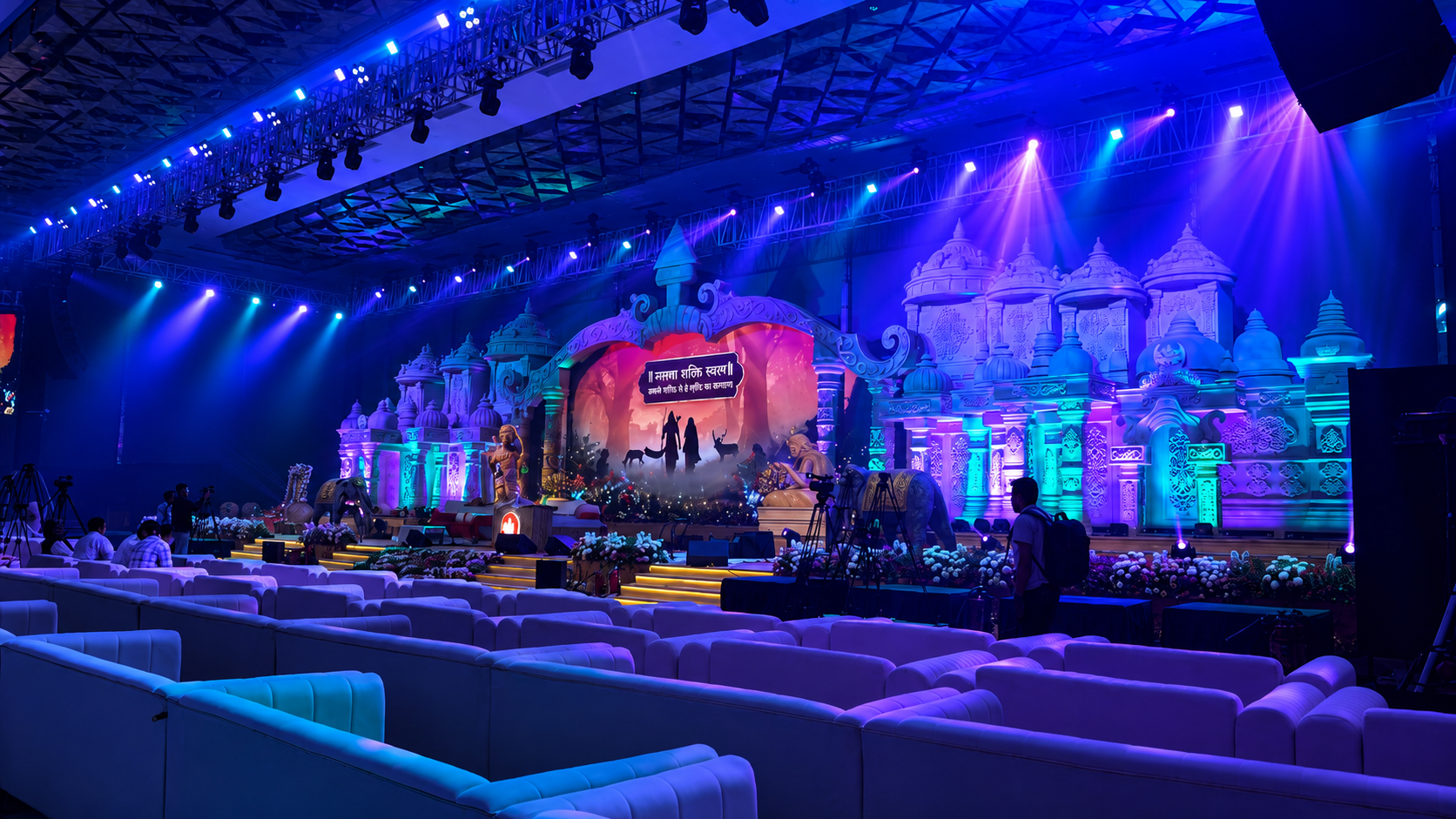
A project from MCI India shows what this looks like under pressure. The team was pitching for a religious event in Raipur for one of India’s largest cement companies. The client wanted 45 creative options from us within four or five days. Cultural accuracy was essential as the concepts included religious symbolism and architecture.
After the team’s first response was rejected, MCI had 24 hours to develop a stronger approach. “We decided to use AI as a speed engine. The same team was doing the work, and humans took responsibility for all the corrections,” explains Samir Kalia, Managing Director, MCI India. “At each step, humans were involved: from sketch to AI prompt generation and narrative check.” The designers judged the output, corrected it and remained accountable for the final work.
The team won the pitch and the client’s leadership subsequently invited MCI to work on its larger main event. This is where faster prototyping becomes commercially valuable. Teams can develop a broader range of options while protecting the quality and accuracy of the work.
How can AI personalise the attendee experience?
Sometimes personalisation means answering a registration question quickly. It could mean helping someone update a hotel booking or giving them information in their own language. It does not always require an elaborate content engine or a completely unique journey for every participant.
MCI USA developed Jade, an AI-powered customer service agent, in response to a growing volume of attendee and member enquiries prior to and during events. James Kelley, Vice President, Registrations, MCI USA, describes the scale of the challenge: “We were doing about 70 congresses, with 80,000 emails and 96,000 phone calls. We had 24 full-time employees, and it was taking 72 hours to send the first response to an email. It was an unmanageable volume.”
The team analysed historical enquiries and found that many followed familiar patterns, including frequently asked questions, requests for profile updates and reservation changes. Once Jade was developed, it could respond to these queries via email, chat and voice. It recognises the user’s language, draws from approved knowledge sources and can complete certain updates in connected systems. Requests outside its business rules are sent to a person.
For participants, the result is faster and more relevant support. And our human agents have more time for complex situations where empathy and judgement matter.
How can AI-powered storytelling strengthen belonging in a global community?
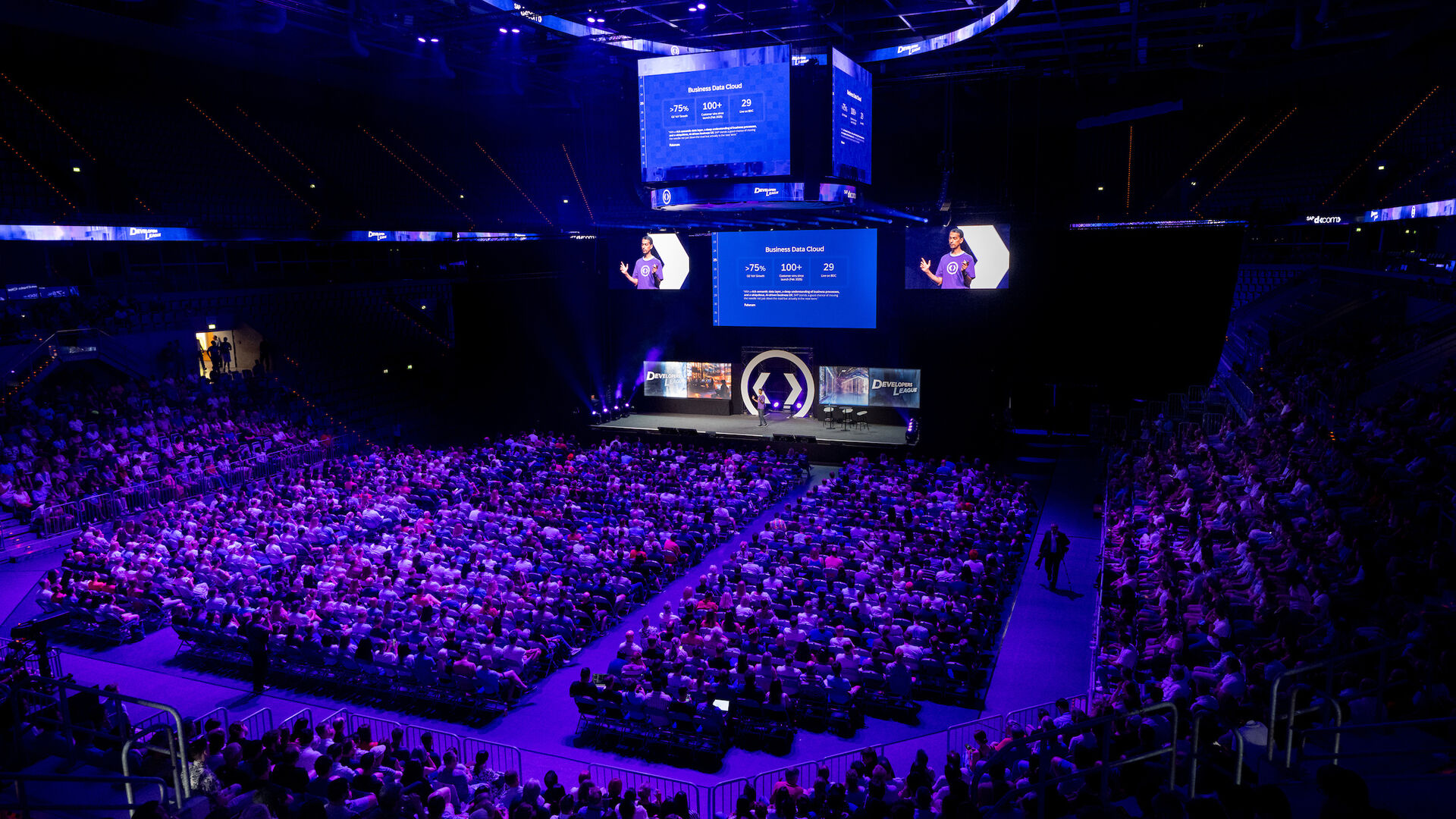
For SAP d-com, the community was already there: more than 50,000 developers around the world. MCI Germany worked with SAP to create a stronger sense of belonging and help developers across regions feel seen within the wider community.
The Developers League, initially a five-part anime series, became a common thread across a hybrid kick-off, virtual deep dives and 37 local events across 21 countries. At the centre of the story is Judy, a young developer who discovers her superpowers, joins the League and learns that the strength of the community is her greatest asset. The characters reflected different ages and cultural backgrounds, mirroring the diversity of SAP’s developer community. Marc Kuhlmann, Creative Director at MCI Germany, says the developers responded positively to seeing that diversity reflected in the story.
The episodes were released during 2025 and 2026, with some shown live at events and others used as cliffhangers between them to keep the story moving. That shared narrative gave people something recognisable to connect with across different moments in the d-com programme.
AI made it possible for the team to produce the series internally. “AI became our superpower for producing the series because three years ago we would not have been able to pull it off internally,” Marc notes. And because the story continued across different formats and successive series, the characters, visual style and narrative needed to remain recognisable throughout.
That consistency depended on a clear production process. “A prompt is only a building block,” says Paul Steinwachs, Project Director at MCI Germany. “Designing the entire process behind it is the real work. Tools change so fast, but the process is the operating system.” The workflow covered story development, visual generation, review, rendering and production, giving the team a repeatable way to keep the story coherent as it developed over time.
(Image rights: SAP SE)
How should teams measure AI-powered event experiences?
AI can generate a huge amount of data. That does not automatically make measurement clearer. A useful experiment begins with a focused question. What should people understand, feel or do differently? Which behaviour would show that the idea is working?
With those answers, teams can then select a small number of measures linked to that outcome. Jade offers a good example. The team could measure enquiry volumes, response times, the types of requests handled and the percentage passed to human agents.
“Only around 18 or 19% of the requests had to be escalated. Those were the requests that did not match the business rules or fell outside what Jade was designed to answer,” notes James. That is a clear performance indicator linked to a real operational goal.
The same principle applies to creative experiences. Teams might test whether a new story is remembered, whether a revised registration journey reduces abandonment or whether personalised recommendations lead people towards more relevant content. AI can identify patterns in the results. People still need to decide which patterns matter and what to do next.

Using AI responsibly
Teams need room to experiment. And they need clear boundaries. Edouard calls this “freedom within the frame”: “We strongly encourage people to innovate but you always have to validate the solutions you use. There are many risks linked to these tools, so you need to understand what happens to the data you put into them.”
Approved platforms, suitable licences and strong data governance need to be part of the workflow. Client data, personal information and confidential concepts must be protected. Outputs also need human review, particularly when the work involves factual information, cultural references, personal data or direct communication with participants.
Clear governance makes responsible experimentation easier. Teams know which tools they can use, what information they can enter and when they need specialist support.

Will AI replace human creativity in event design?
The examples shared above began with human challenges. MCI India needed to respond to a demanding brief at speed. MCI USA needed to reduce pressure on its contact centre. MCI Germany wanted to create a story that connected a global community.
AI helped each team move faster and explore more possibilities. People understood the audience, set the boundaries and decided what was worth developing. Samir captures that relationship well: “AI was used as a speed engine. It was not a shortcut or a magic button. Humans took responsibility.”
That is the promise of the AI-powered experience lab. It gives teams a faster, more practical route from an early idea to something people can experience, test and improve.
And it keeps human creativity where it belongs: setting the direction, evaluating the output and shaping the final experience through human knowledge and judgement.
Where could AI add value to your next experience?
MCI can help you identify the right opportunities, prototype ideas quickly and build an AI-enabled approach around your audience, business goals and governance requirements. Let’s collaborate on stronger creative ideas, more personalised journeys and smarter event delivery.
Frequently asked questions about AI-powered event design
Q1. What parts of event design can AI improve?
AI can support the full design process, from early research and concept development to visual prototyping, content creation, attendee services and post-event analysis. It is especially useful when teams need to explore several ideas quickly, adapt content for different audiences or identify patterns in large volumes of event data.
Q2. How can AI help us co-create an event with our audience?
Teams can use AI to turn audience feedback into early concepts, sample journeys or content ideas that people can react to. This makes co-creation more concrete: participants can respond to something visible, and the experience team can identify the ideas worth developing before significant budget is committed.
Q3. How can AI improve registration and attendee customer service?
AI can respond to common questions, support participants in different languages and help process straightforward registration, accommodation or profile changes. MCI’s Jade AI and OneSystem Plus solutions are designed to reduce friction across registration, housing and customer service while giving organisers real-time information to support decision-making.
Q4. What should we look for in an AI-powered event agency?
Look for an agency that combines AI capability with event strategy, creative judgement, audience understanding and operational delivery. It should be able to explain how an idea supports your objectives, how data will be protected, how outputs will be reviewed and how success will be measured. MCI’s corporate services cover live, virtual and hybrid experiences, event technology, registration, content, reporting and full event-portfolio assessment.
Glossary
AI-powered experience lab: A way of working that uses AI to develop, visualise, test and improve experience ideas before full production begins.
Experience prototyping: Creating an early, testable version of an event concept, audience journey, environment or interaction so teams can gather feedback and refine it.
AI hallucination: When an AI system generates information or visual details that appear credible but are inaccurate, invented or inappropriate.
Prompt: The instruction, context and constraints given to an AI tool to guide its output.
Data governance: The rules and processes that determine how data is collected, stored, protected, accessed and used.
Learn more
Author bio
Katerina Tolmacheva is Marketing Director at mci group, where she leads strategic marketing, brand governance and lead generation across the global organisation.
 Katerina Tolmacheva - Marketing Director


