The solution
Reimagining devotion through human-led AI event design
MCI approached the project with one central idea: spirituality should not only be seen, but felt and experienced. The creative strategy transformed Navdha Bhakti from philosophy into a lived, immersive journey.
The experience design blended AI-led ideation with human creative refinement to accelerate concept development while maintaining cultural authenticity. Using platforms such as ChatGPT, Gemini and Canva, teams collaborated in real time to rapidly explore and evolve visual concepts. Layered prompting techniques were built around Hindu motifs, temple architecture, dome structures and traditional patterns to ensure strong cultural relevance.
MCI used AI as a rapid visualisation tool, with human curation guiding every stage of the process. The team moved from hand-drawn sketches to AI-generated concepts, then refined the chosen direction through Photoshop, 3ds Max and on-ground execution to ensure the final environment was culturally relevant, technically feasible and true to the Navdha Bhakti narrative.
Initial hand-drawn sketches of entrance arches, pathways and stage layouts established scale and spatial direction before being developed into detailed AI-generated architectural visualisations. Designers curated each output, refined the visual direction in Photoshop and developed the final model in 3ds Max, ensuring the design could move from concept to on-ground execution with the right scale, cultural detail and spiritual sensitivity.
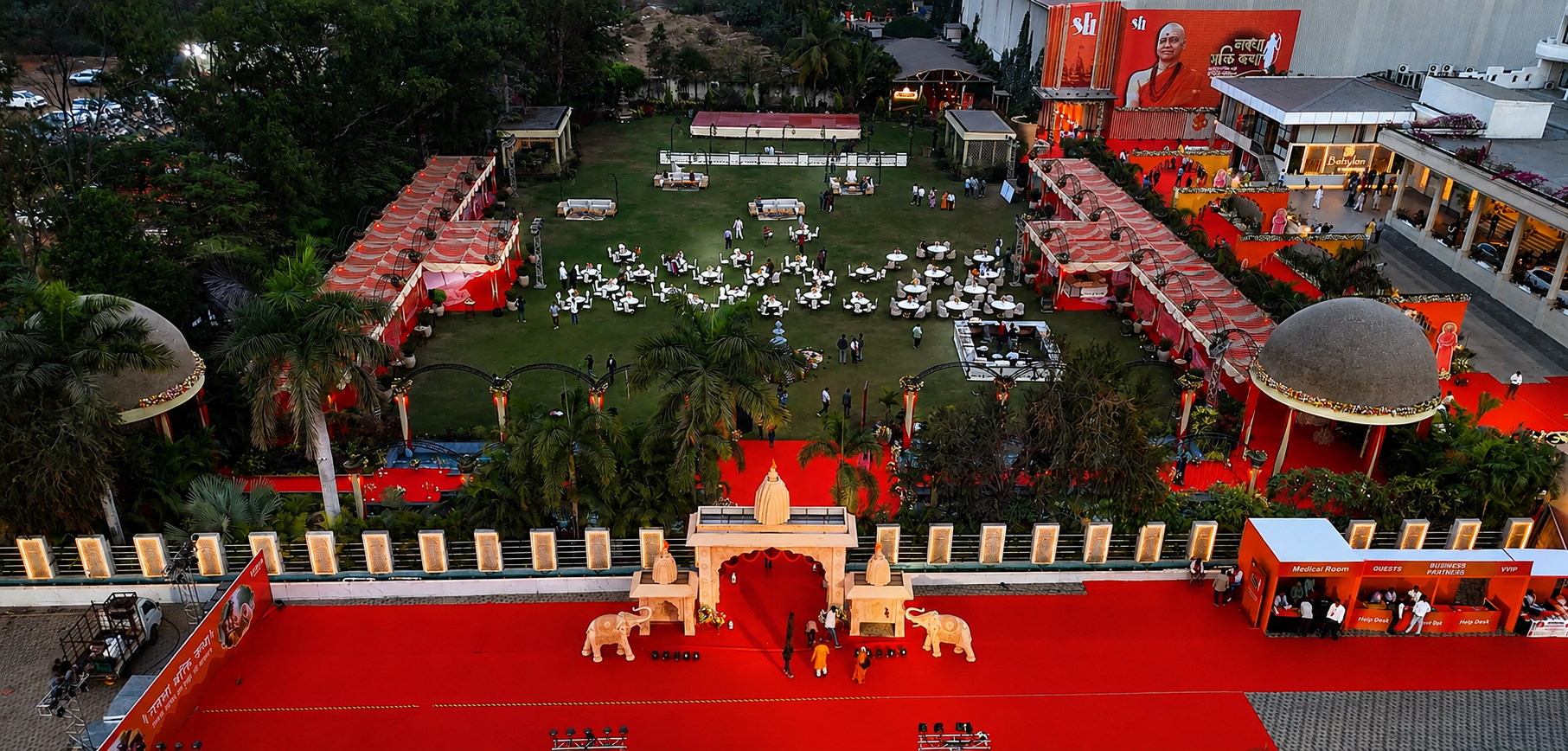
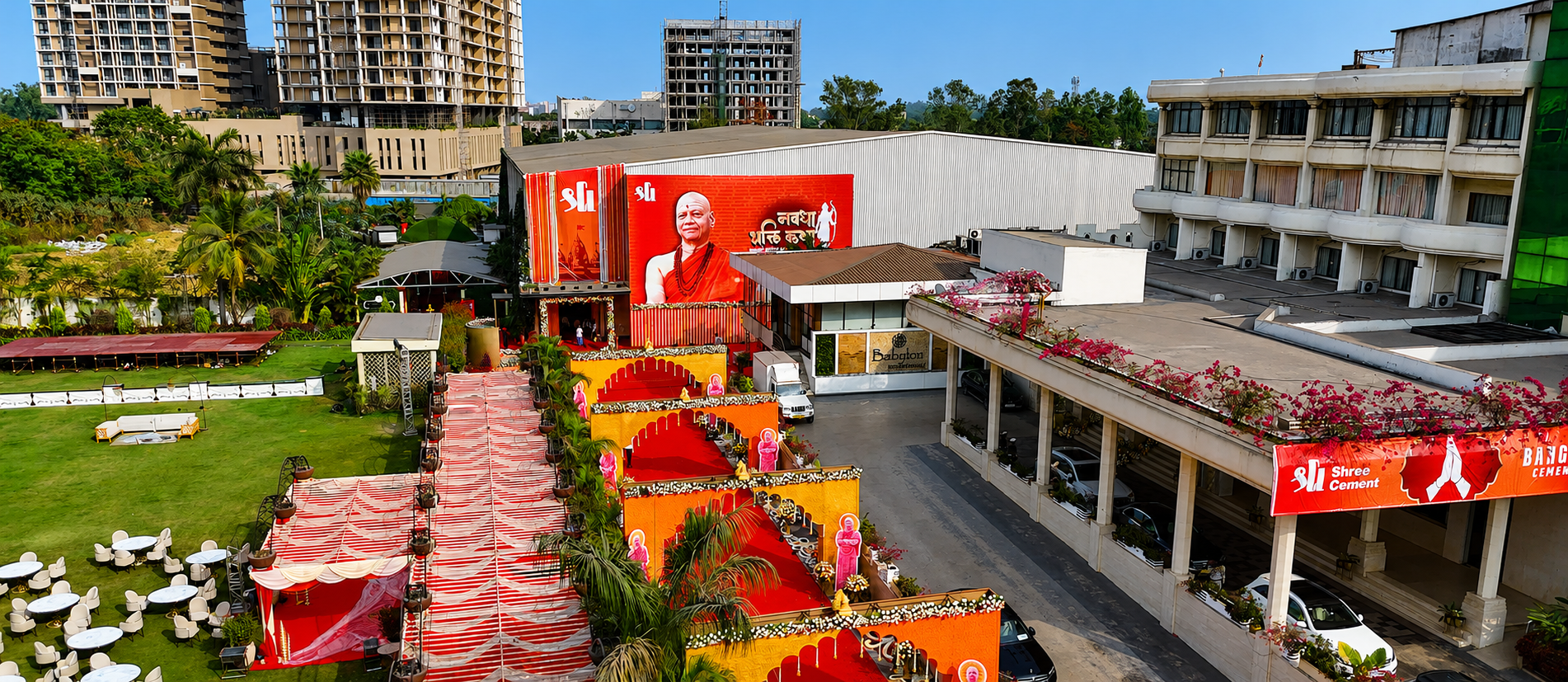
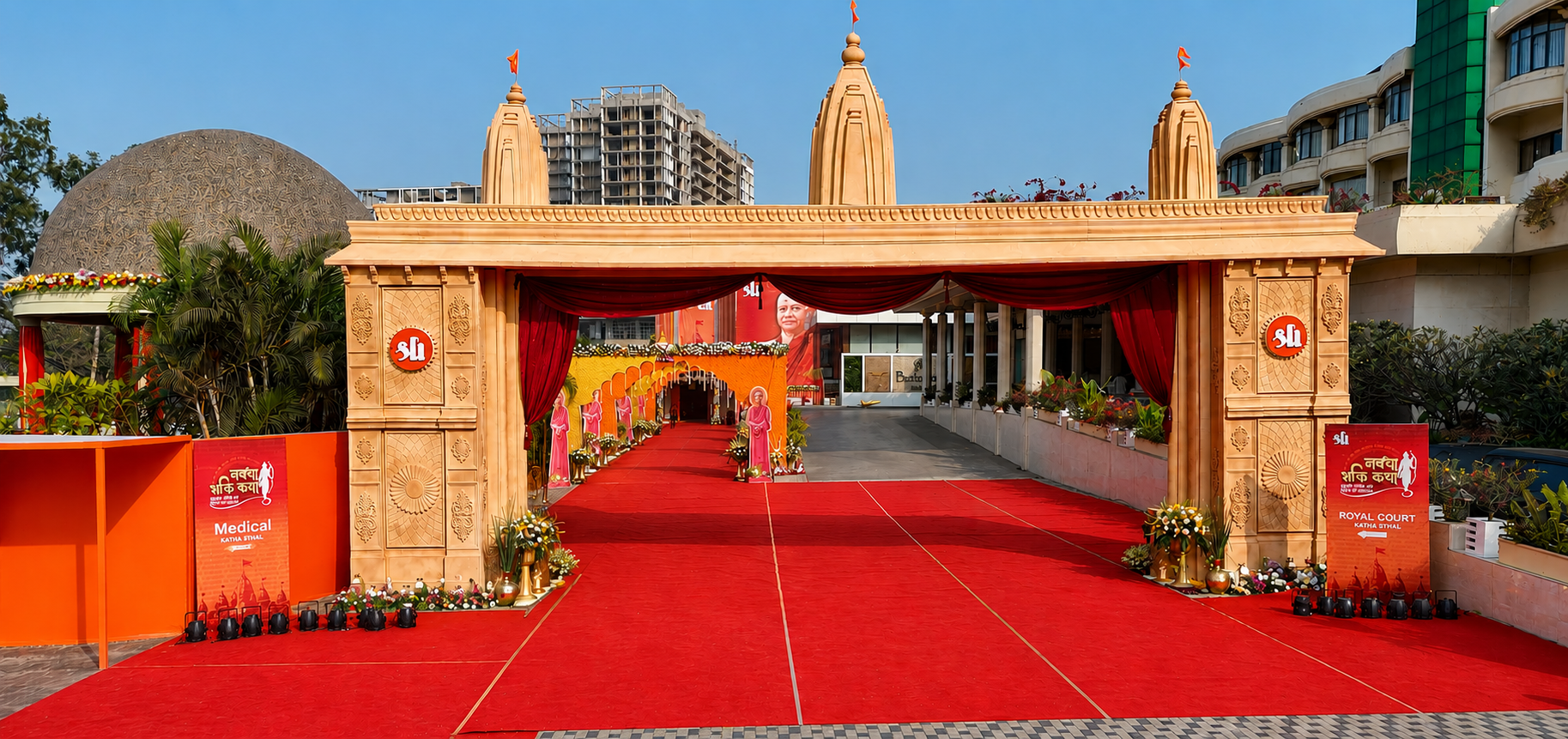
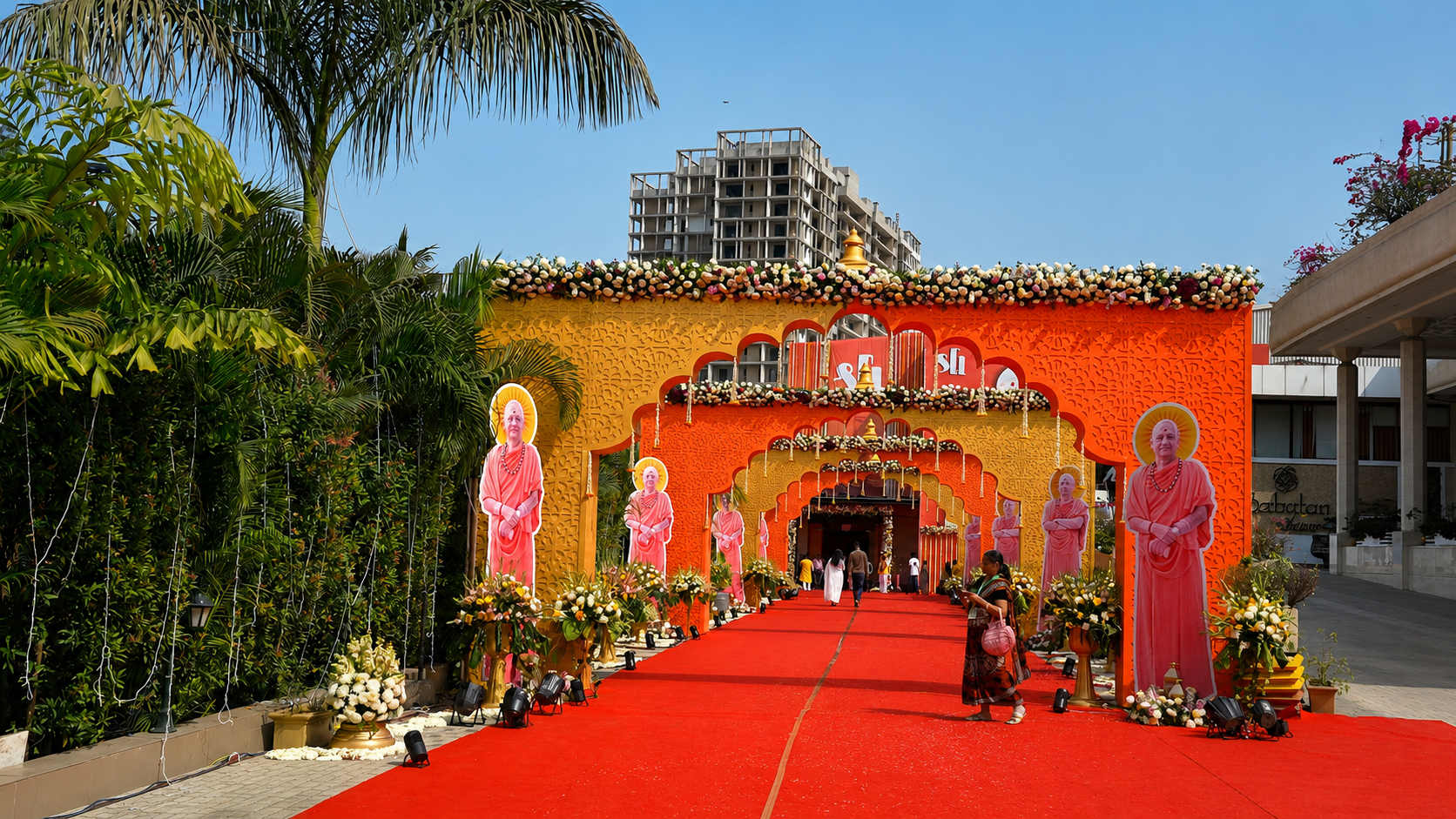
The final experience featured four grand entrance gates inspired by the Ayodhya Ram Mandir, designed to create a powerful sense of spiritual arrival and devotion from the very first touchpoint. Drawing from traditional temple architecture, intricate carvings, illuminated domes and ceremonial detailing, the gates established the visual identity of the event while reinforcing the sacred narrative of Navdha Bhakti. These monumental structures became symbolic gateways into the spiritual journey, blending cultural authenticity with large-scale experiential design.
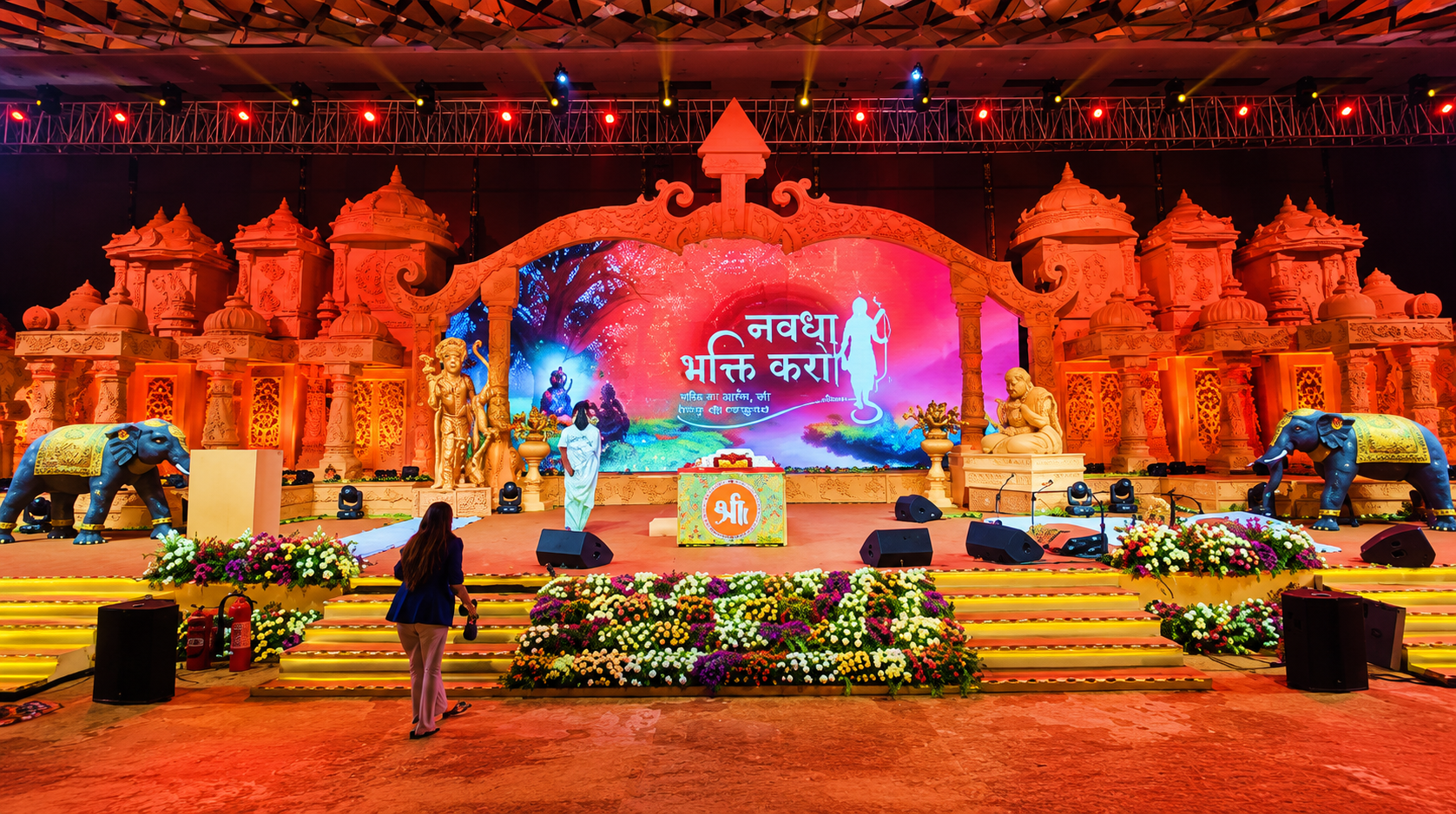
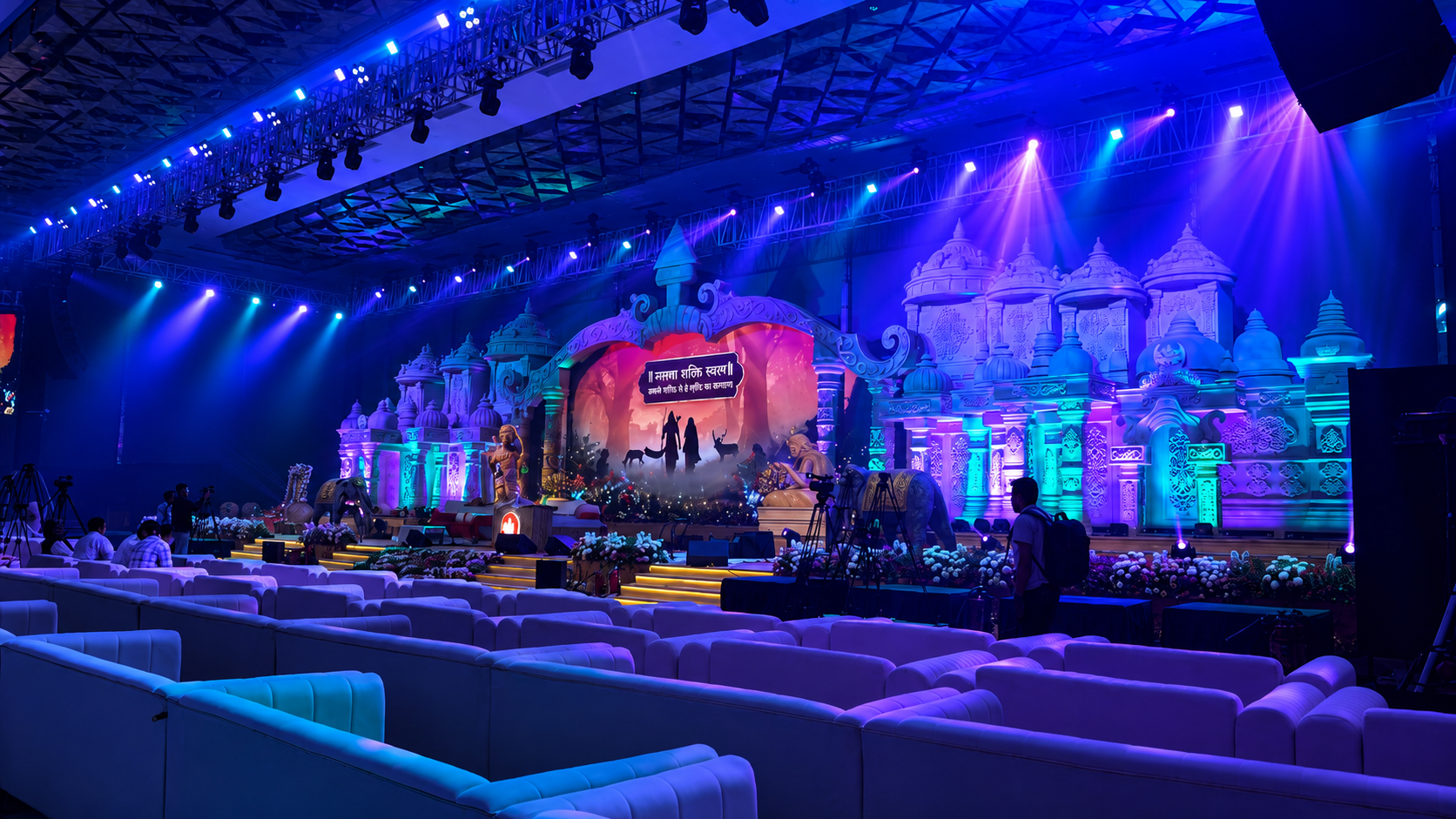
The experience further unfolded through temple-inspired entrance arches, immersive walkthroughs, gala environments and curated spiritual zones that guided attendees through the story of Navdha Bhakti. The event was executed across multiple dedicated zones within the Babylon Hotel, which was fully taken over for the occasion. The Main Hall served as the spiritual centrepiece, hosting the Navadha Bhakti Katha by Govind Giri Ji Maharaj. The Ballroom was designed as a media interaction zone for press and official engagements, while the Lawn hosted a gala dinner attended by distinguished guests, including the former Governor. The Hon’ble Chief Minister was also present at Guru Ji’s bungalow during the celebrations.
The two-day event welcomed more than 5,000 attendees and began with a ceremonial Kalash Yatra led by women, setting the devotional tone for the experience before the Katha commenced. Careful planning across zoning, hospitality, security and operations ensured smooth crowd movement and a seamless attendee journey throughout the venue.
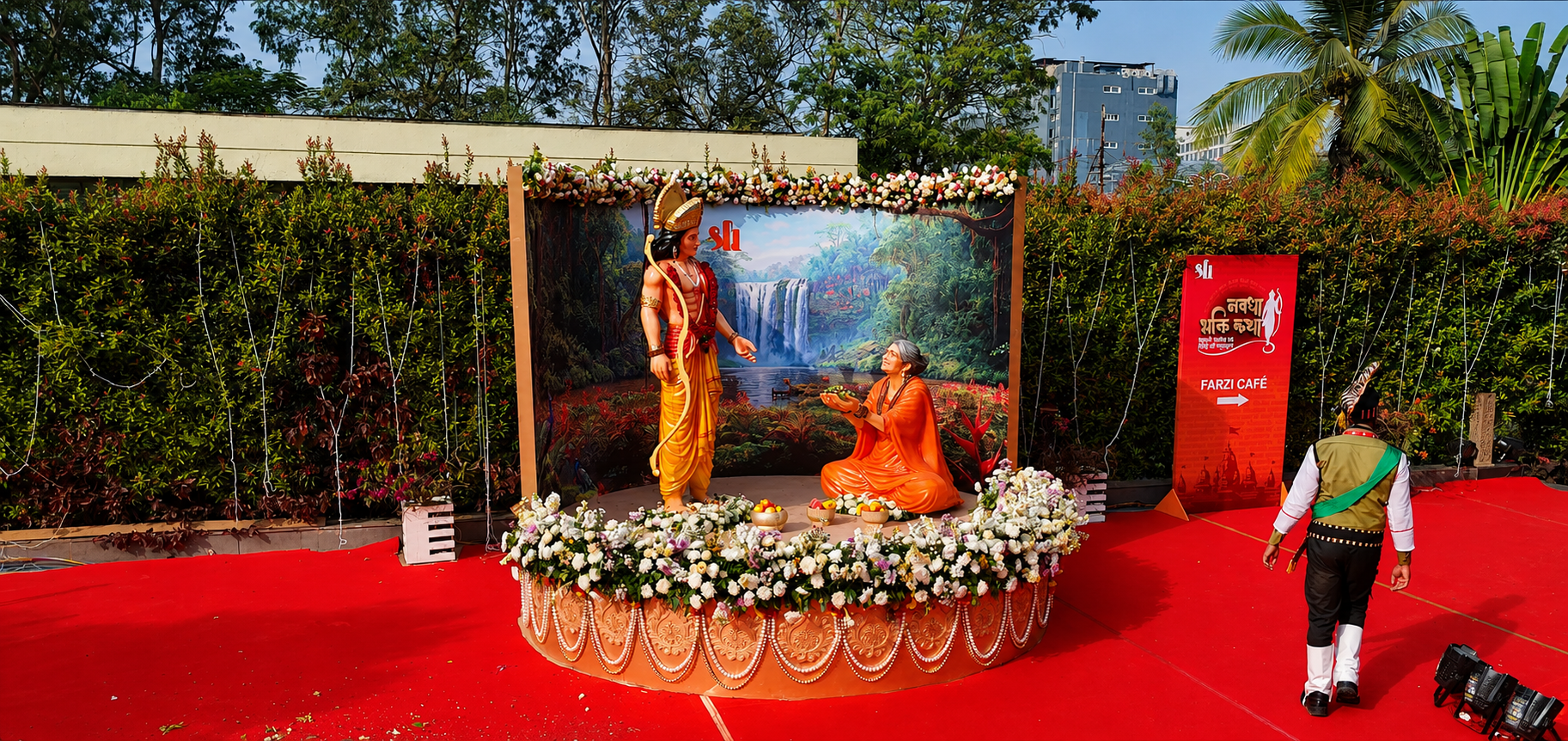
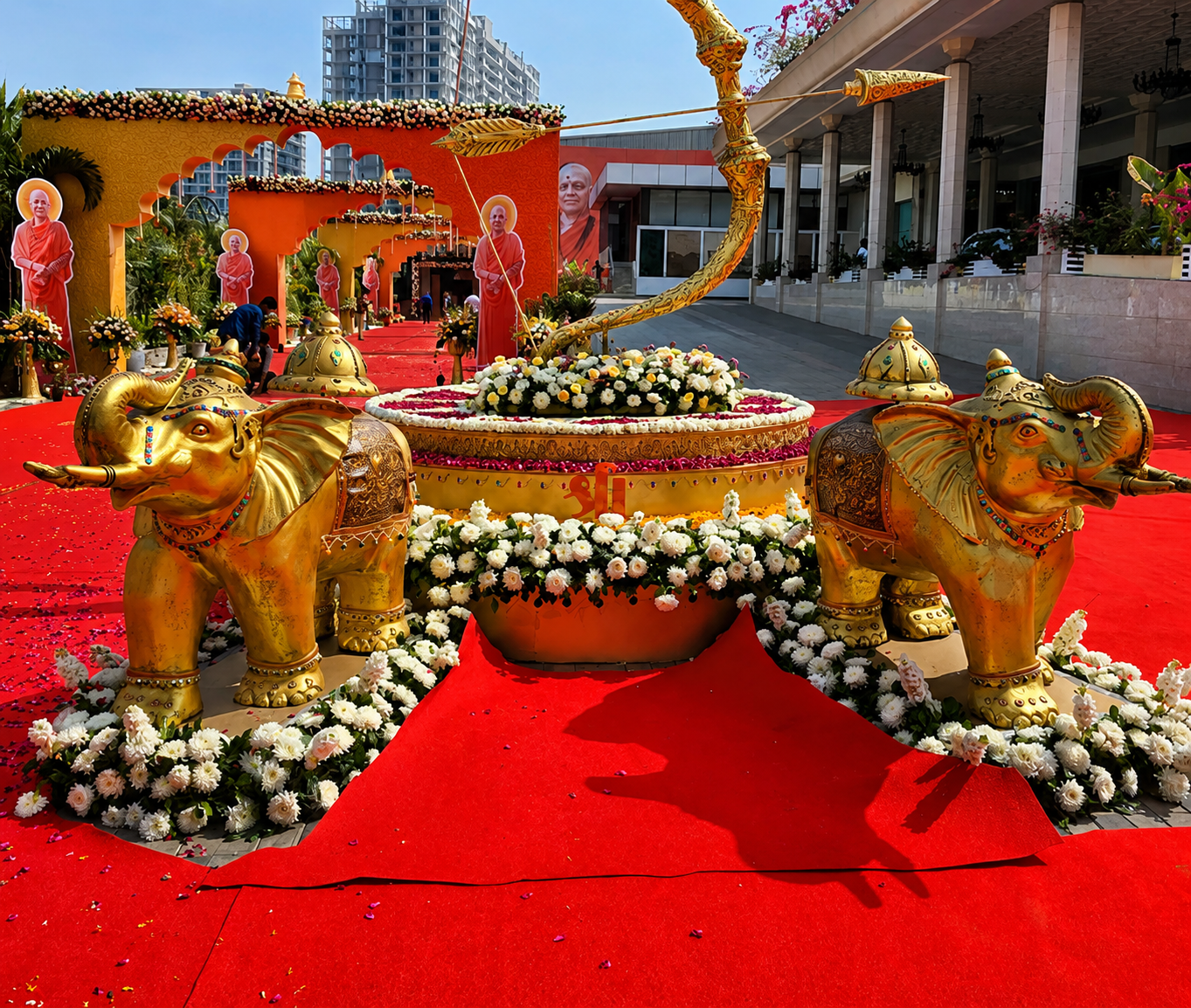
A series of immersive photo opportunities and installations added emotional depth and audience engagement to the experience. Specially curated installations showcased the bond and connection between Shree Ram and Mata Shabari, symbolising devotion, humility and faith. A Charan Paduka photo installation represented reverence, surrender and the spiritual path of devotion, while the Shree Ram Dhanush photo opportunity symbolised strength, righteousness and courage. These installations became key engagement points for attendees, blending spiritual storytelling with interactive visual experiences.
More than 15,000 square feet (>1,400 m2) of integrated branding was seamlessly incorporated across the venue, balancing large-scale visibility with the devotional atmosphere.
The results
Strengthening brand leadership through immersive cultural engagement
The event became a standout example of how technology and culture can work together to create meaningful large-scale experiences. MCI successfully delivered a spiritually immersive environment for more than 5,000 attendees while maintaining authenticity, operational precision and high visual impact.
The human-led AI workflow enabled faster creative exploration, stronger visual refinement and clearer production planning, helping the team move from concept to execution with confidence.
Attendees experienced Navdha Bhakti as a journey rather than a static event, moving through immersive spaces designed to evoke devotion, reflection and participation. Extensive branding integration across the venue strengthened Shree Cement’s visibility and recall, while the scale and execution of the experience received strong appreciation from the client.
The project positioned MCI as a future-ready experiential partner capable of combining technology, cultural storytelling and large-scale execution to deliver emotionally resonant brand experiences.
Testimonial
“I would like to formally express our appreciation for the support and execution provided by your team during the recent event. Your professionalism and attention to detail contributed significantly to its success.
“Your team demonstrated exemplary performance across multiple areas, including timely execution, high-quality finishing and detailing, seamless handling of last-minute requirements and professional coordination throughout the event. All activities and deliverables were completed within planned timelines, ensuring a smooth experience for attendees and stakeholders alike.
Thank you once again for your valuable partnership. We look forward to working together on future engagements.”
FAQs
How can brands create immersive spiritual or cultural experiences at scale?
Successful cultural experiences combine authenticity, storytelling and operational precision. MCI designs immersive environments that translate spiritual or cultural themes into meaningful attendee journeys while managing large-scale audiences and production requirements.
Q1. How can AI support experiential event design?
A. AI can accelerate concept generation, visual exploration and creative iteration during the ideation phase. MCI combines AI-assisted workflows with human creative direction to improve speed while ensuring quality, technical accuracy and cultural relevance.
Q2. How do you balance technology with cultural authenticity?
A. Technology works best when it supports the narrative rather than overpowering it. MCI uses layered creative processes, cultural references and human curation to ensure every design element remains authentic, respectful and emotionally resonant
Q3. What makes immersive storytelling effective for large events?
A. Immersive storytelling allows attendees to experience a narrative through space, architecture, visuals and interaction rather than simply observing it. This creates stronger emotional engagement, higher recall and deeper audience participation.
Q4. How can experiential design strengthen brand visibility?
A. Experiential design integrates branding naturally into the environment, helping audiences engage with the brand through meaningful experiences rather than overt advertising. For Shree Cement, large-scale branding integration enhanced visibility while maintaining the spiritual tone of the event.
Partner with MCI to transform cultural storytelling, technology and immersive design into meaningful large-scale experiences. Get in touch today.


